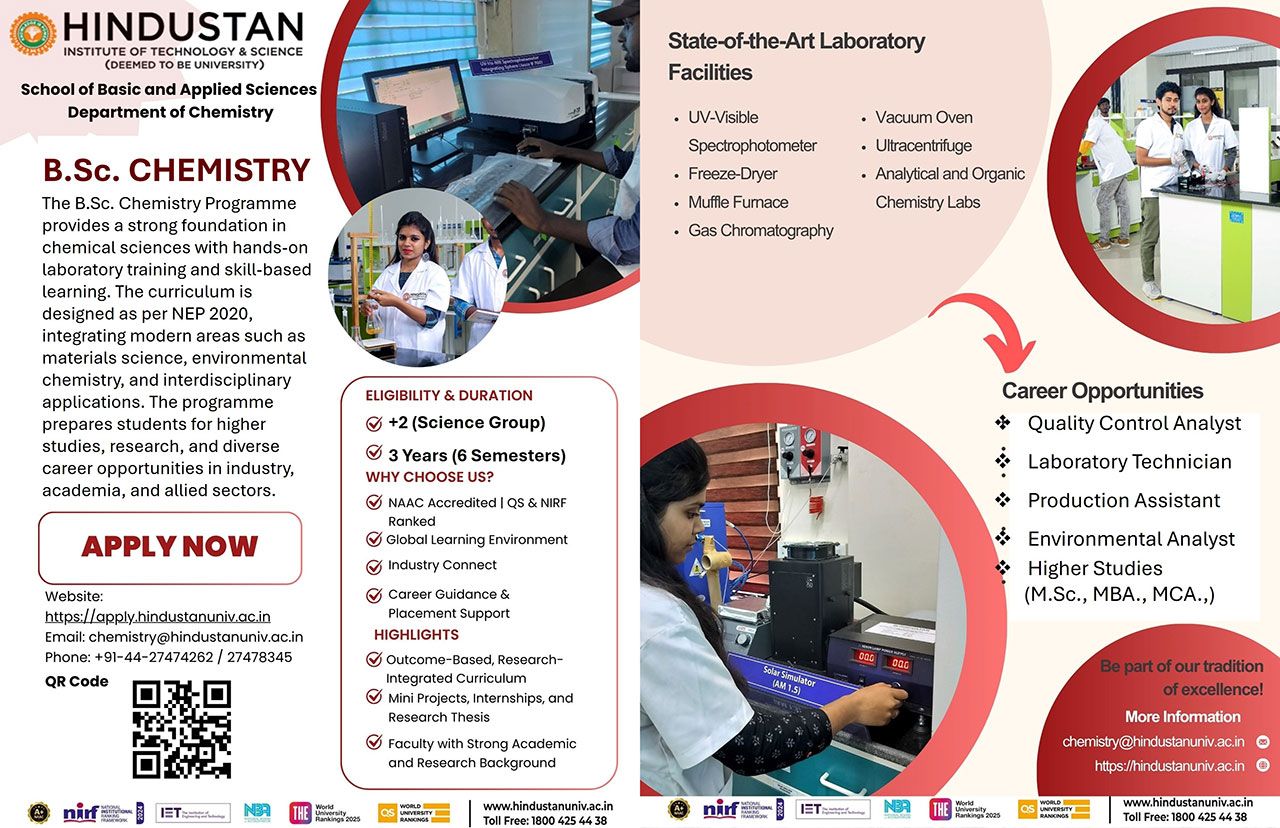
Bachelor of Science (B.Sc) Chemistry

NOW OPEN

Admissions 2024

Unlock your future: Enroll Now for Admissions 2024

About the Department

SCHOOL OF BASIC AND APPLIED SCIENCES

DEPARTMENT OF CHEMISTRY

The Department of Chemistry, right from its inception, extends its services to the engineering students, providing a strong foundation and practical exposure on Chemical Sciences related to their field. Well qualified faculty with strong research exposure provide guidance to students and research scholars. Besides offering B.Sc. and M.Sc. Programmes in Chemistry, the department is involved in research in the following areas:

  • Bioorganic chemistry
  • Photocatalysis
  • Biofuels
  • Polymeric supercapacitors
  • Synthesis of organic materials
  • Biopolymers
  • Nanomaterials for biomedical and environmental remediation
Arrow
About the Programme

SCHOOL OF BASIC AND APPLIED SCIENCES

DEPARTMENT OF CHEMISTRY

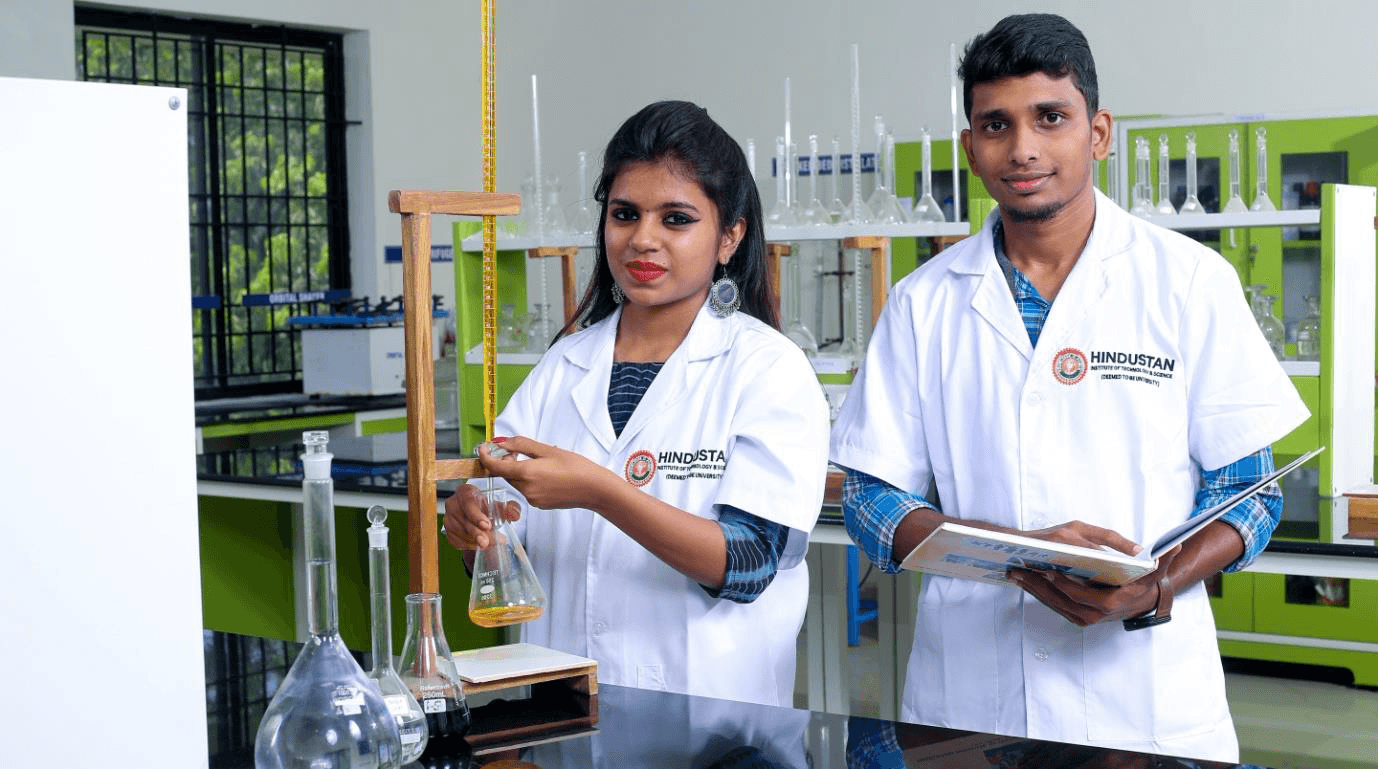
The full-time B.Sc. (Chemistry) programme offers comprehensive coverage of the core areas of chemical sciences, namely Physical, Organic, Inorganic, and Analytical Chemistry. The syllabus also provides exposure to interdisciplinary areas related to chemistry. In addition, the programme emphasizes hands-on practical training and project work with research orientation as essential components of learning. The total credit requirement for the programme is 126. Course evaluation comprises Continuous Internal Assessment (50%) and End-Semester Examination (50%). Upon completion of the programme, students will gain a strong understanding of the applications of chemistry in day-to-day life, enabling them to meet the challenges of current industrial needs.

Arrow
Vision and Mission

SCHOOL OF BASIC AND APPLIED SCIENCES

DEPARTMENT OF CHEMISTRY

Vision

The Department of Chemistry strives for the construction of a strong society through Science Education by being adaptive, innovative and constantly meeting the ever-growing demands of the scientific community in inter-disciplinary Chemical Sciences, thus creating prepared minds to face the challenges.

Mission

To educate the students to gain an understanding of the fundamentals of Chemical sciences through a gradual exposure and equip them with practical skills to face the challenges in Technology Development.

Arrow
PEO, PO and PSO

SCHOOL OF BASIC AND APPLIED SCIENCES

DEPARTMENT OF CHEMISTRY

PROGRAMME’S EDUCATIONAL OBJECTIVES (PEO’S)

The Programme Educational Objectives (PEOs) of the Bachelor of Science in Chemistry (B.Sc Chemistry) are:

  • PEO1. Excel in his/her professional career and/or pursue higher education including research by applying the knowledge of chemistry.
  • PEO2. Apply chemical principles and theories and acquire skills in synthesis, instrumentation and characterization.
  • PEO3. Work productively as chemistry professional by adopting to environment with lifelong learning and adhering to ethical standards and apply the knowledge acquired for the improvement of the society.

PROGRAMME’S OUTCOMES (PO’s)

  • PO1: Disciplinary knowledge: Capable of demonstrating comprehensive knowledge and understanding of one or more disciplines that form a part of an undergraduate Programme of study.
  • PO2: Communication Skills: Ability to express thoughts and ideas effectively in writing and orally; Communicate with others using appropriate media; confidently share one’s views and express herself/himself; demonstrate the ability to listen carefully, read and write analytically, and present complex information in a clear and concise manner to different groups.
  • PO3: Critical thinking: Capability to apply analytic thought to a body of knowledge; analyse and evaluate evidence, arguments, claims, beliefs on the basis of empirical evidence; identify relevant assumptions or implications; formulate coherent arguments; critically evaluate practices, policies and theories by following scientific approach to knowledge development.
  • PO4: Analytical reasoning: Ability to evaluate the reliability and relevance of evidence; identify logical flaws and holes in the arguments of others; analyze and synthesize data from a variety of sources; draw valid conclusions and support them with evidence and examples, and addressing opposing viewpoints.
  • PO5: Research-related skills: A sense of inquiry and capability for asking relevant/appropriate questions, problem arising, synthesising and articulating; Ability to recognise cause-and-effect relationships, define problems, formulate hypotheses, test hypotheses, analyse, interpret and draw conclusions from data, establish hypotheses, predict cause-and-effect relationships; ability to plan, execute and report the results of an experiment or investigation.
  • PO6: Team work: Ability to work effectively and respectfully with diverse teams; facilitate cooperative or coordinated effort on the part of a group, and act together as a group or a team in the interests of a common cause and work efficiently as a member of a team.
  • PO7: Scientific reasoning: Ability to analyse, interpret and draw conclusions from quantitative/qualitative data; and critically evaluate ideas, evidence and experiences from an open-minded and reasoned perspective.
  • PO8: Information/digital literacy: Capability to use ICT in a variety of learning situations, demonstrate ability to access, evaluate, and use a variety of relevant information sources; and use appropriate software for analysis of data.
  • PO9: Self-directed learning: Ability to work independently, identify appropriate resources required for a project, and manage a project through to completion.
  • PO10: Multicultural competence: Possess knowledge of the values and beliefs of multiple cultures and a global perspective; and capability to effectively engage in a multicultural society and interact respectfully with diverse groups.
  • PO11: Leadership readiness/qualities: Capability for mapping out the tasks of a team or an organization, and setting direction, formulating an inspiring vision, building a team who can help achieve the vision, motivating and inspiring team members to engage with that vision, and using management skills to guide people to the right destination, in a smooth and efficient way.
  • PO12: Lifelong learning: Ability to acquire knowledge and skills, including “learning how to learn”, that are necessary for participating in learning activities throughout life, through self-paced and self-directed learning aimed at personal development, meeting economic, social and cultural objectives, and adapting to changing trades and demands of work place through knowledge/skill development/reskilling.

PROGRAMME’S SPECIFIC OUTCOMES (PSO’s)

  • PSO1: Fundamental Knowledge & Laboratory Skills Graduates will acquire strong foundational knowledge in organic, inorganic, physical, and analytical chemistry and develop hands-on skills to perform chemical experiments safely and accurately.
  • PSO2: Analytical Thinking & Problem-Solving Graduates will be able to analyse chemical data, interpret spectra, apply mathematical tools, and solve chemical problems using logical and scientific reasoning.
  • PSO3: Application of Chemistry in Real-World Contexts Graduates will apply chemical principles to fields such as pharmaceuticals, materials science, environmental studies, and industrial chemistry, and will be prepared for higher studies or entry-level industry roles.
Arrow
Career Prospects of the Course

SCHOOL OF BASIC AND APPLIED SCIENCES

DEPARTMENT OF CHEMISTRY

Depending on the choice of profile and specialization track, there is a constant lookout for talent by the organizations and companies in the chemical sector.

• Quality Control / Quality Assurance Analyst

Works in chemical, pharmaceutical, food, or materials industries to test raw materials and finished products, ensuring compliance with quality standards.

• Laboratory Technician / Chemical Analyst

Performs routine chemical analyses, sample preparation, and instrumentation-based testing in research labs, testing centers, and industrial laboratories.

• Production Chemist / Process Assistant

Assists in chemical manufacturing processes, monitoring reactions, optimizing conditions, and ensuring safe and efficient production operations.

• Higher Studies opportunities

Graduates can pursue M.Sc. Chemistry and allied specializations, followed by research/Ph.D., or opt for professional programmes such as MBA, B.Ed., or IPR.

Arrow
Curriculum & Syllabus

SCHOOL OF BASIC AND APPLIED SCIENCES

Program Details

SCHOOL OF BASIC AND APPLIED SCIENCES

Laboratory and Facilities

SCHOOL OF BASIC AND APPLIED SCIENCES

DEPARTMENT OF CHEMISTRY

Materials Chemistry Laboratory:

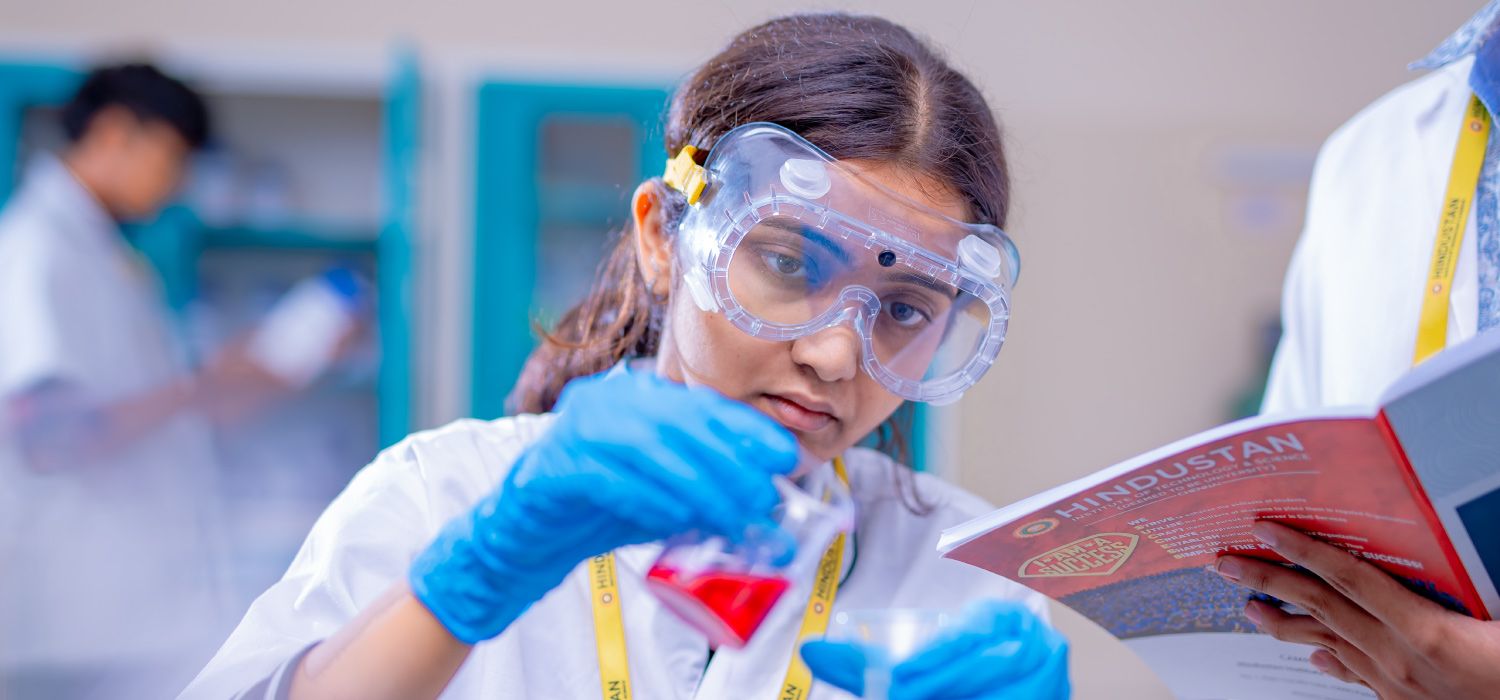
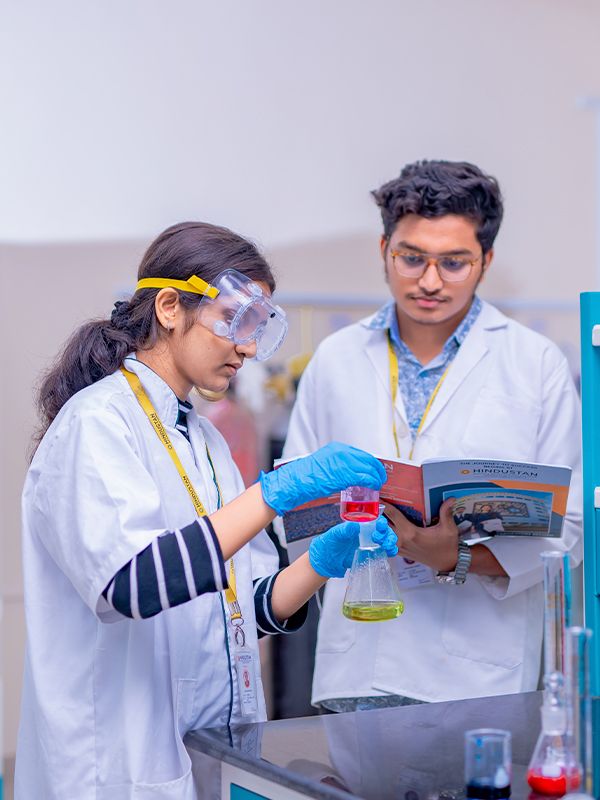
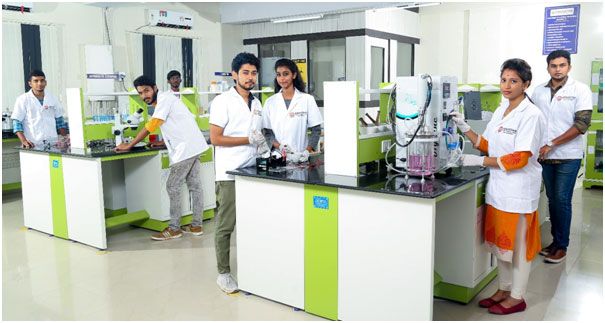
The Department of Chemistry has a Materials Chemistry Laboratory for B.Sc. and M.Sc. Chemistry students on the ground floor of Vaiyapuri Hall. The laboratory is equipped with modern digital instruments aligned with the curriculum and syllabus. Special attention is given to each student by providing sufficient apparatus, ensuring they can learn chemistry with excellence.

Msc-Chemistry-Lab1.jpg
material-lab.png
research-lab.png

Research Laboratory:

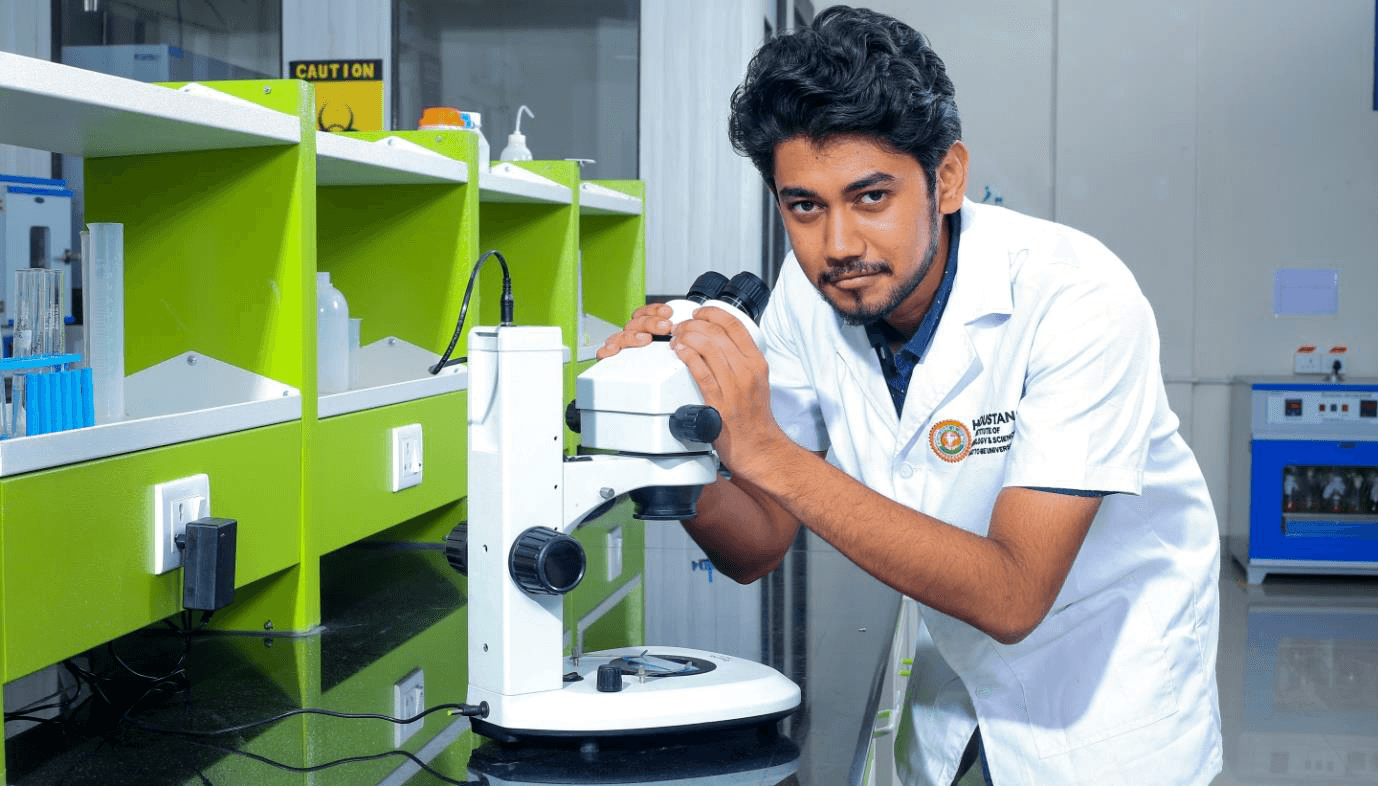
The Department of Chemistry has a dedicated Research Laboratory designed to support the research activities of undergraduate and postgraduate students, research scholars, and faculty members. The department comprises 8 core faculty members with diverse expertise in chemical sciences, who are engaged in funded research projects that result in high-quality publications in national and international journals. The department is equipped with major research facilities, including:

  • UV-Visible Spectrophotometer
  • Freeze-Dryer
  • Sonicator
  • Ultra-Low temperature Freezer
  • Gas Chromatography
  • Three-way gas analyser
  • Shaking Water bath
  • Vacuum Oven
  • Muffle Furnace
Arrow
Our Faculty

SCHOOL OF BASIC AND APPLIED SCIENCES

DEPARTMENT OF CHEMISTRY

Our Faculty

S.NOFaculty NameDesignationSpecialization
1Dr. M. PrabaharanProfessor & CoordinatorBiomaterials and Nanomaterials
2Dr. P. S. RaghavanProfessorInorganic Materials and Catalysis
3Dr.Indrajit ShownProfessorMaterial Chemistry, Catalysis and Energy
4Dr. S. IndujaAssociate Professor (Visiting)Inorganic Materials and Catalysis
5Dr. K. KiruthigaA. P (S.G)Biomaterials and Supramolecular Chemistry
6Dr. D. Sathya SeeliA. P (S.G)Polymers and Biomaterials
7Dr. B. GajalakshmiA. P (S.G)Inorganic materials and Nanomaterials
8Dr. M. ChandrakalaA. P (S.G)Nano thin films
Arrow
Research and Developement

SCHOOL OF BASIC AND APPLIED SCIENCES

DEPARTMENT OF CHEMISTRY

Research and Development

The Department of Chemistry actively engages in multidisciplinary research focusing on:

  • Materials chemistry
  • Nanomaterials
  • Polymers
  • Biomaterials
  • Environmental chemistry, and
  • Sustainable technologies.

Faculty members publish in reputed peer-reviewed journals, undertake funded and collaborative research, and guide postgraduate and doctoral research scholars. The department also promotes student research through project work, internships, and industry–academia interactions, fostering innovation and research culture.

Arrow
Events

SCHOOL OF BASIC AND APPLIED SCIENCES

DEPARTMENT OF CHEMISTRY

EVENTS ORGANISED

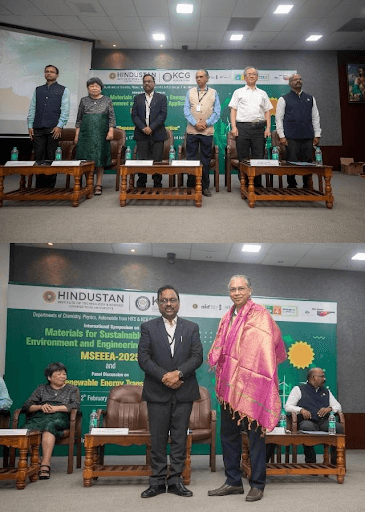
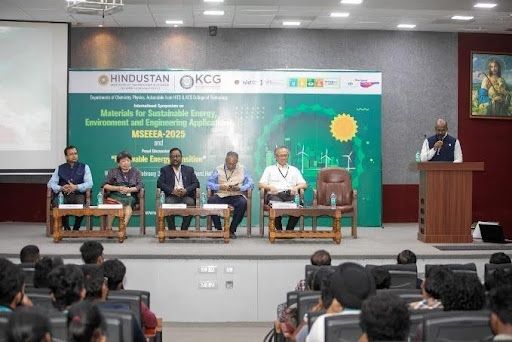
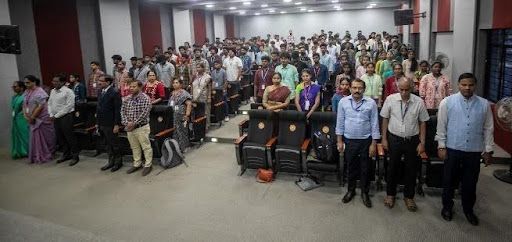
International Symposium on Materials for Sustainable Energy, Environment and Engineering Applications (MSEEEA-2025)

The International Symposium on Materials for Sustainable Energy, Environment and Engineering Applications (MSEEEA-2025) was successfully conducted on 12th February 2025 at Good Shepherd Hall, Hindustan Institute of Technology and Science (HITS), Chennai. The event brought together eminent researchers, industry experts, and academicians to discuss advancements in materials science for sustainable energy applications. The symposium focused on photocatalysis, electrocatalysis, hydrogen fuel cells, and materials for sustainable lighting.

Dignitaries, including Mr. Sadagopan Krishnan (Senior Vice-President, Ashok Leyland Limited, India), Prof. Li-Chyong Chen (National Taiwan University, Taipei, Taiwan) and Prof. Kuei-Hsien Chen (Academia Sinica, Taipei, Taiwan), were felicitated. The discussions and presentations provided valuable insights into cutting-edge materials research for sustainable energy applications.
hindustan1.jpg

hindustan2.jpg

hindustan3.png

Winter course on Scientific Research Practice & Instrumentation Techniques on 20th December 2023

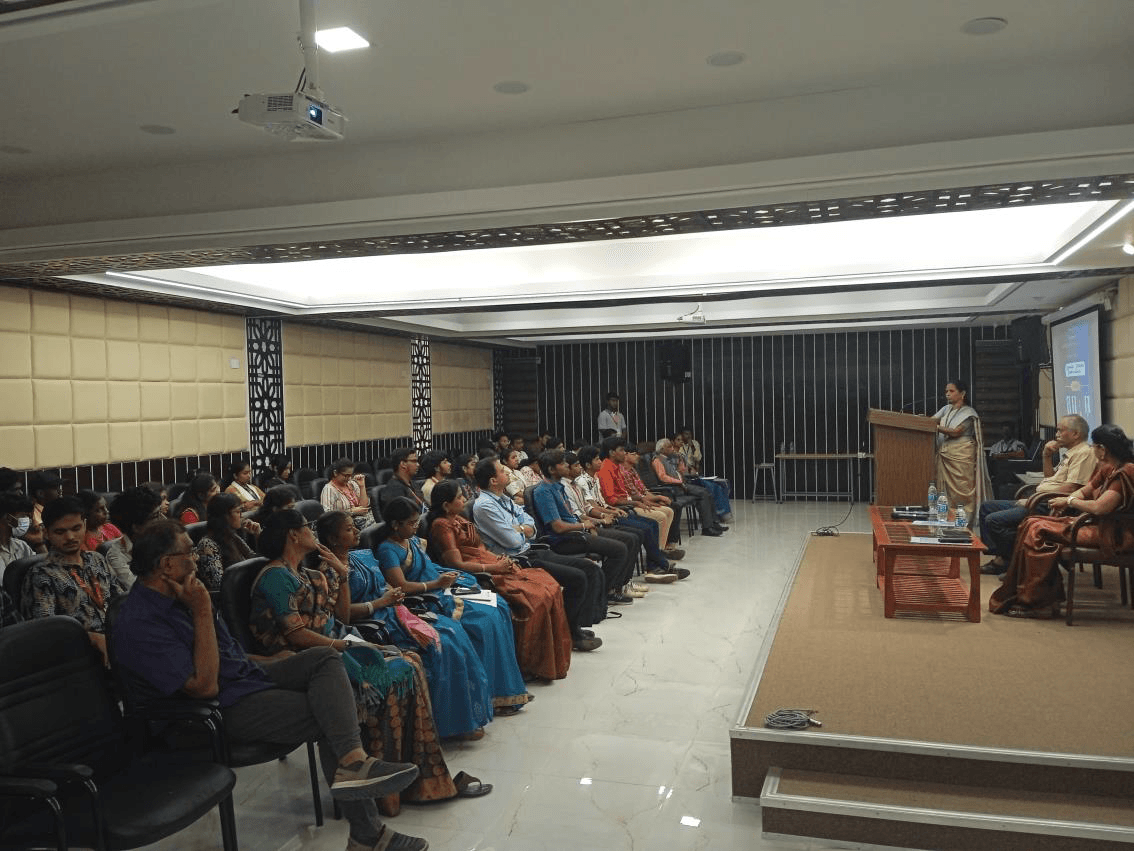
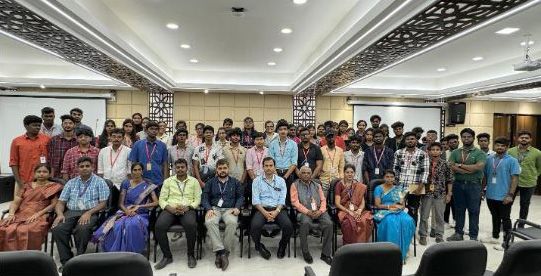
The Department of Chemistry and Physics at Hindustan Institute of Technology and Science, Chennai, conducted a One-Day Winter Course on Scientific Research Practice and Instrumentation Techniques on December 20, 2023, at KS Moorthy Hall, SPADE Building. The workshop aimed to offer in-depth insights into research methodologies and instrumentation techniques, with a special focus on the significance of proper research documentation. A total of 23 participants, including research scholars and students, attended the event to enhance their knowledge and skills in these areas.
events-1.png

hindustan5.jpg

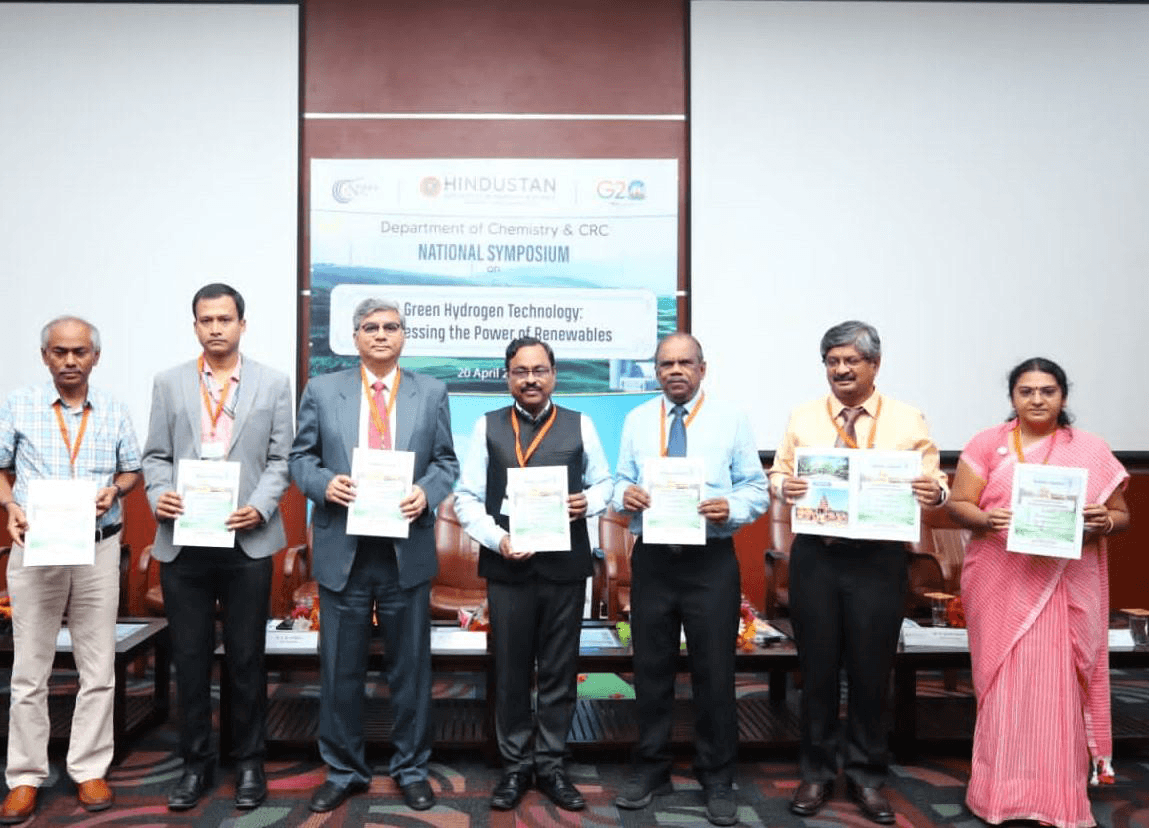
National Symposium On Green Hydrogen Technology: Harnessing the Power of Renewables on 20th April 2023

The National Symposium on Green Hydrogen Technology: Harnessing the Power of Renewables was successfully conducted on 20th April 2023 at the Andromeda Lecture Theatre, Hindustan Institute of Technology and Science. The event served as a dynamic platform for academicians, researchers, and industry professionals to explore the latest advancements in green hydrogen production, storage, and utilization.

Eminent speakers from both academia and industry delivered insightful talks on the role of hydrogen as a sustainable energy carrier and its integration with renewable energy sources. The symposium emphasized the importance of green hydrogen in achieving energy transition goals and reducing carbon emissions. Participants engaged in interactive sessions and panel discussions, fostering knowledge exchange and collaborative opportunities. 
events-2.png

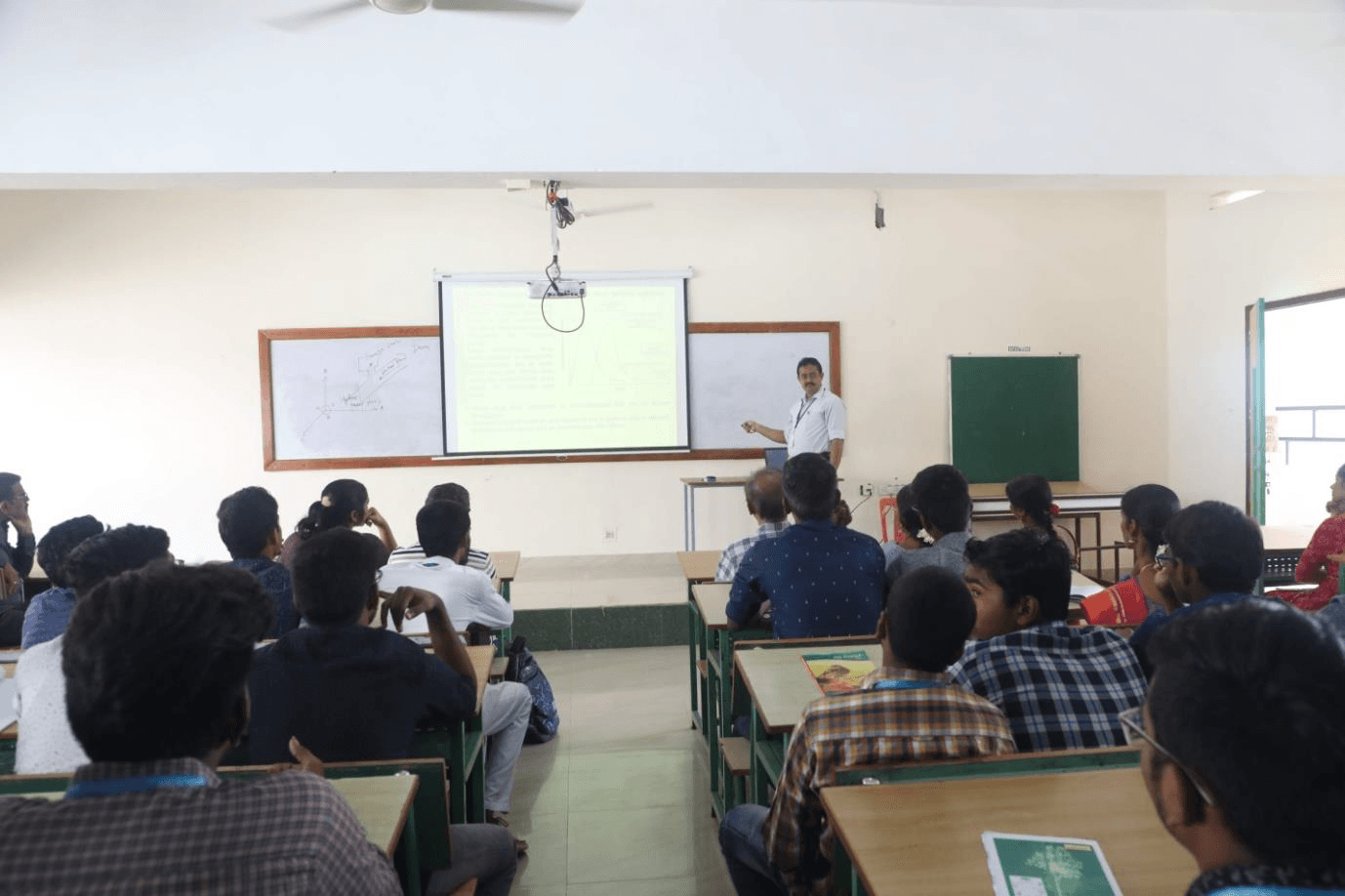
Guest Lecture on Advancements of biomaterials in Drug delivery on 7th Feb 2020.

A Guest Lecture on "Advancements of Biomaterials in Drug Delivery" was organized on 7th February 2020 by the Department of Chemistry, Hindustan Institute of Technology and Science. The session was delivered by Dr. Agnishwar Girigosai, Professor, Faculty of Allied Health Sciences, Chettinad Academy of Research and Education, Chennai.

Dr. Girigosai provided valuable insights into the emerging trends and applications of biomaterials in targeted and controlled drug delivery systems. The lecture highlighted recent innovations, clinical relevance, and the interdisciplinary nature of biomaterials research.

The event witnessed active participation from students and faculty members, who engaged in an interactive Q&A session, making the lecture both informative and thought-provoking.
events-3.png

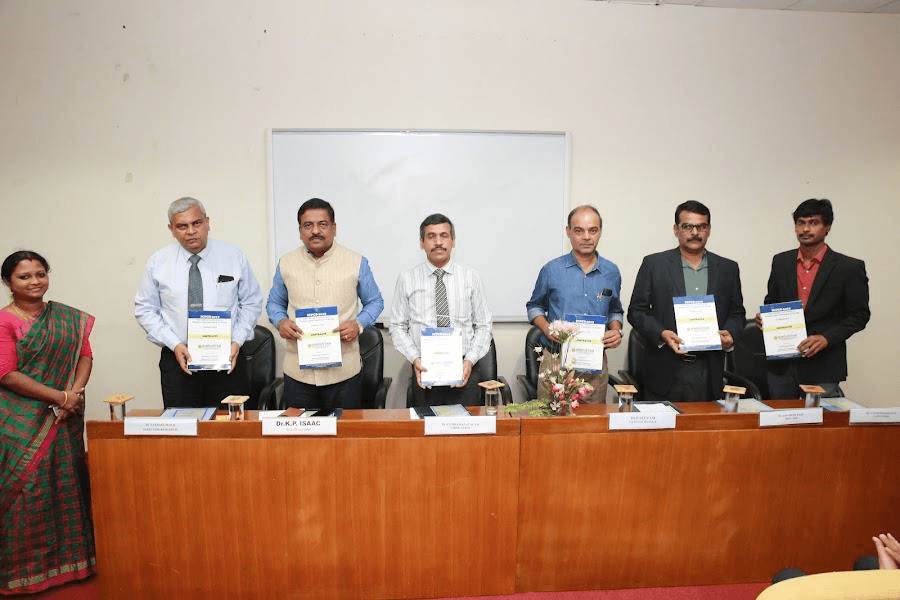
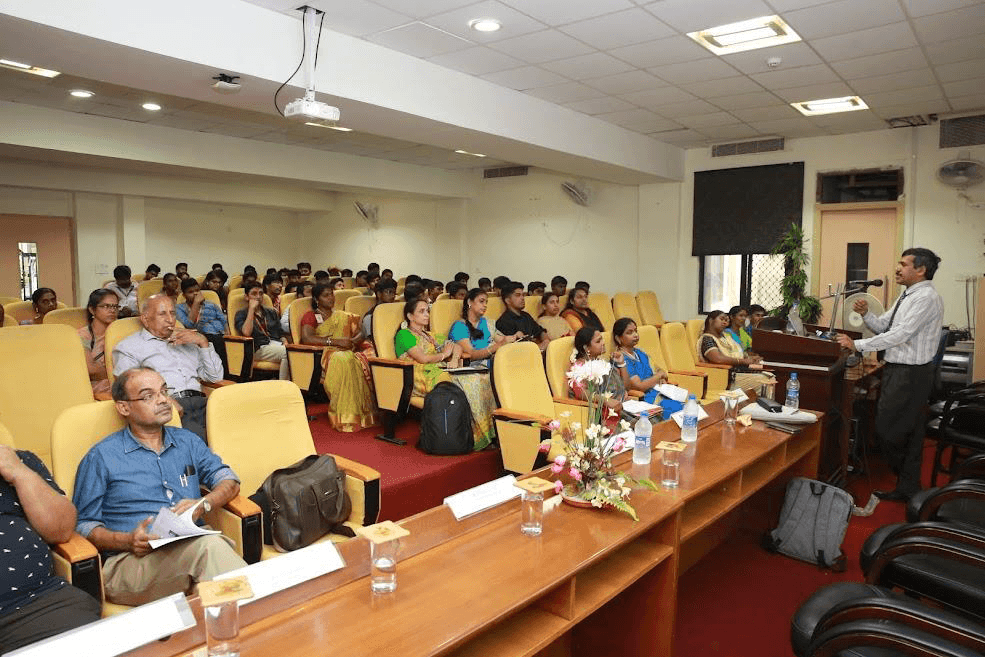
International Conference on Physics and Chemistry of Solids on 7&8 March 2019.

The International Conference on Physics and Chemistry of Solids was held on 7th and 8th March 2019 at Padur Hall I, Dr. K. C. G. Verghese Research and Resource Centre, Hindustan Institute of Technology and Science. The conference brought together researchers, academicians, and industry experts from across the globe to discuss recent advancements and future directions in the field of solid-state physics and chemistry.

The two-day event featured keynote addresses, invited talks, and technical sessions covering a wide range of topics including material synthesis, characterization techniques, nanostructures, and solid-state applications. The conference provided a vibrant platform for knowledge exchange, fostering interdisciplinary collaboration and research opportunities. The event concluded on a high note with enthusiastic participation and positive feedback from all attendees.
events-4.pngevents-5.png

SCIENCE MEET- 2018

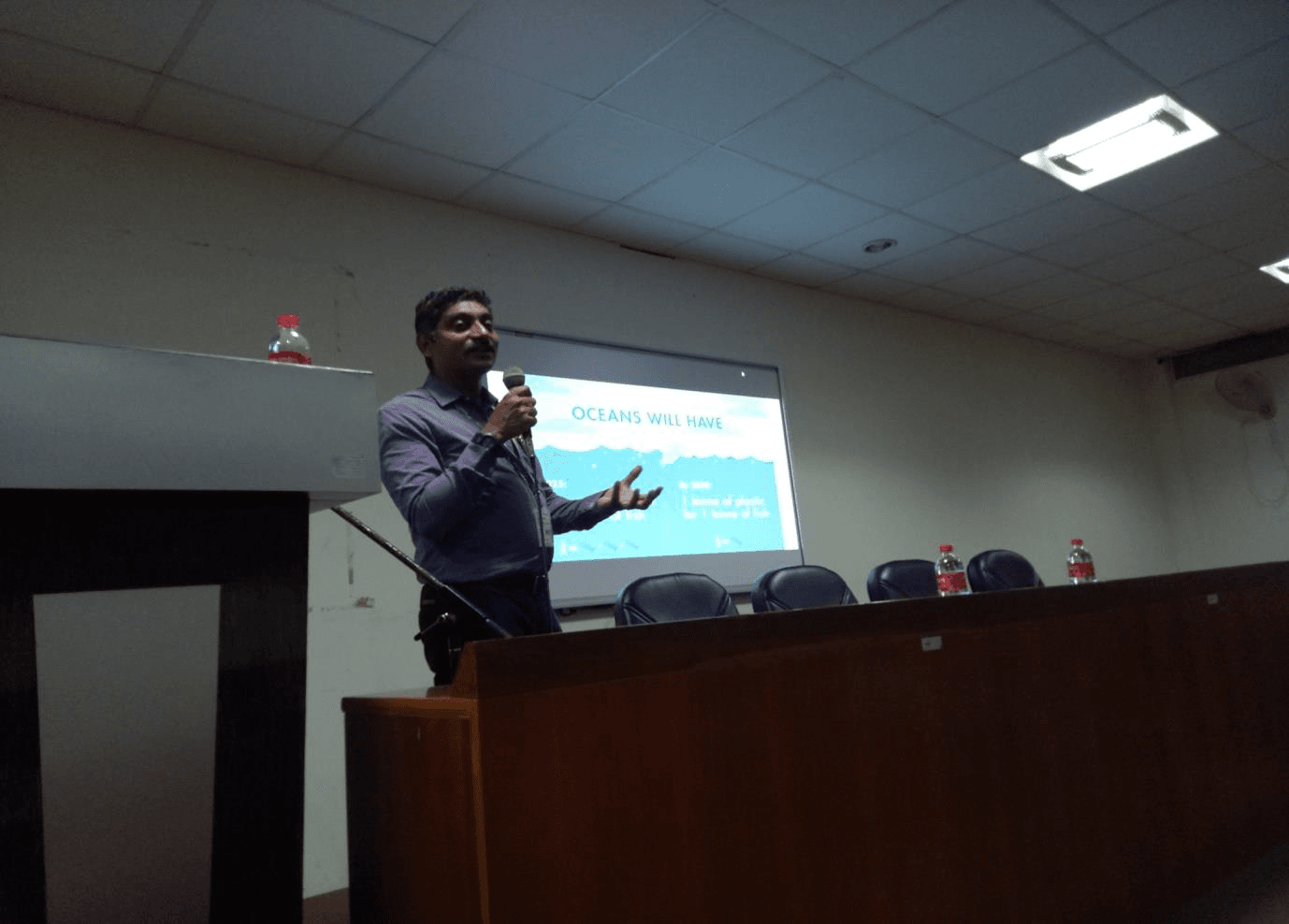
A Guest Lecture on "Plastics and Its Impact on the Environment" was conducted on 07th September 2018 at Padur Hall, Dr. K. C. G. Verghese Research and Resource Centre, Hindustan Institute of Technology and Science. The session was delivered by Dr. V. Deepak Samuel, Scientist - D, National Center for Sustainable Coastal Management, Government of India, Anna University Campus, Chennai.

The lecture focused on the environmental hazards caused by plastic pollution, especially in coastal and marine ecosystems. Dr. Samuel highlighted current research findings, government policies, and sustainable alternatives to plastic usage.
events-6.png


Arrow